Category: EDCI 336 (Page 2 of 3)

This is a category for the EdTech course. Please add this category in addition to the relevant edtech assignment category(ies).

Reflection #7: PSII

This week in class, I found the idea interesting, and seeing how PSII does free inquiry is great, it still leaves me wondering how that works in a fully public school. In my class before his presentation, I had the opportunity to talk to a teacher at a local private school, who also follows an inquiry-based method, using a global International Baccalaureate (IB) program. https://www.ibo.org/, which is a more structured inquiry style, and still uses the traditional north American system with classes. The private school is a fully independent school with much higher tuition fees and an extremely monetarily privileged school community. These two examples of full systems based on inquiry both in the private systems really make me wonder how this could work in the public system, where the demographics and socio-economic situations will vary.

Equity in education is extremely important in my philosophy, and I have a dilemma with the private system because I feel the representation isn’t an accurate reflection of the people who are in the community and representation is a crucial part of learning.

I know Oak Bay is a public school, but the community is still financially very well off comparatively. When students come from economic backgrounds and live in wealthy neighbourhoods, privilege still exists. I have had the opportunity to take a class with a teacher from Oak Bay high school, and their financial availability within the families is remarkably different, compared to even what I experienced in a high school in district 61 that was also more well off than many schools in British Colombia. So while it will be very interesting to hear about how it runs at Oak Bay, it leads me to the question of can an inquiry-based system work at a school where the socioeconomic framework isn’t as ideal as the schools I have heard. I want it to work, but have unfortunately not seen an example.
Reflection #6

This week in class, I really related to using technology with purpose and having intent with our incorporation of technology in classes. As a music educator, this is a principle I interact with often, because everything we do has to have intent, particularly in the music we select. The aspect of multiculturalism and representation and making sure that music is a piece to lead to meaningful learning for students musically, culturally and holistically. Teaching a piece from an under-represented composer is good, but it becomes tokenism instead of actual representation. This context translates to technology, and asking yourself as the educator “Why am I incorporating this? How will it benefit my student’s learning and reach the learning outcomes?” Intention versus Function is incredibly important, and it’s also a part of authentic assessment and having integration in a meaningful way is important for students to buy in and own their learning. For me in my practice, SAMR will be most beneficial, as I believe in giving students multiple avenues to express their learning and understanding, so allowing them to demonstrate understanding in a way meaningful and personally effective manner is great to have them involved and excited in their learning.

For the use of Audacity, I have actually used it to create music before! In one of my theory courses, we were assigned to take sounds from an environment, and edit them using basic effects (to mimic cutting a tape recording) and create a piece from that. The style is called Musique concrète. Mine was from a series of bells that were very close to a concentration camp, and I manipulated it using audacity. I named it “As Bells Toll”. Here it is! My interaction with the program doing this encompassed many of the same techniques it would take to edit a podcast, particularly in making cuts and layering sounds (Like background music) But I made some music! this is also a great way to get students who may be interested in creating and composing involved and giving them an ‘in’ to music, and does not require prior knowledge. Unfortuantly, the file will not open anymore, I am not sure why. I have tried many options to open it but none will work. I would appreciate any advice in opening it. It is an .aud file. I am hoping to create something with Audacity over reading break, and I have an idea of what I want to do, but need the time to execute it well!

Free inquiry #5- Strumming Patterns

During this experience, one thing I have found I really struggle with is strumming patterns, so that has been my focus this week. I find remembering and staying on the pattern while playing the chords with my left hand, so I looked at various strumming patterns and read articles on how different Ukulele players strum, and many use their index fingers, and I tried that, but I am afraid that my finger will dislocate, so I decided it was safer to stay strumming with the side of my thumb. I learned how to read strumming patterns, and practiced them slowly, and aimed for accuracy. The examples provided are incredibly helpful! They are still challenging, but I have been practicing while watching a movie because it makes it become muscle memory much faster, and the multitasking of watching something and playing helps set up playing and singing! Once I get the hang of these patterns I think my playing will improve quite a bit.

Some sources I used: (Unfortunately some of these links will not embed!)

https://www.ukulele-tabs.com/strumming-patterns.html

https://takelessons.com/blog/ukulele-strumming-patterns-z10

Free Inquiry #4- Open Sources

I have been looking around for open sources to aid in my playing, and found some that will be beneficial as a new teacher or TOC! They are good guides to explain where to start and short enough to do in one lesson. 

This source is a great one for teaching students from the very beginning. It gives step-by-step instructions to play and states it in an age-appropriate way for younger learners. It does not go into specific detail, which is beneficial to not overwhelm a new player. There are videos embedded into the post so students can watch examples of how to play. 

https://www.oercommons.org/authoring/26891-about-the-ukulele/view

this is a lesson to teach students how to play using a video they watch, and it comes with a worksheet for students to fill out! The video goes in-depth about the anatomy of the instrument, the different sizes of ukuleles and how sound is made on the instrument! 

https://www.oercommons.org/courseware/lesson/68146/overview

This source talks about chucking and muting the instrument. I did not know what chucking a ukulele is, so I got to learn something new as well! It’s in a screen recording format, where there are slides and the teacher demonstrating on webcam. She explains what it is, how to do it and demonstrates how it’s done. The teacher goes through practicing techniques which I appreciate, since giving students methods to practice increases the likelihood of them practicing substantially. She goes over the symbol in a strumming pattern and where it appears in a pattern in detail. It is scaffolded really well to gradually build complexity and it doesn’t feel too fast. She goes through other strumming patterns involving the chuck technique to show students how it’s used, which is great as it gives students more motivation to learn! There is a short assignment included for students as well which seems doable for students! 

I was honestly surprised that there were any sources available publicly, as music sources are rare. But I am looking forward to learning from the chuck video myself! Hopefully, as time passes more music educators will post material online, as most are happy to share their resources in a face-to-face manner. Personally, I wonder if it comes down to the seemingly universal agreement in music that you take an idea from someone, credit them the first three times you use that idea and then you just do it. It definitely is not a law that’s written, but it seems to be a universal rule in district 61 at least, I’ve heard it from many teachers over the years. But hopefully, it will become a motivator for teachers to post their amazing strategies for free use since there are so many wonderful educators out there.

Ed Tech Reflections #5

This week I really enjoyed our class and getting to do some basic photo editing. I did not know that PowerPoint was able to do much in terms of photo editing, and being able to use a familiar program in a new way is incredibly useful, as the initial ‘bump’ that comes along with a new application can take away from the task at hand and lesson that learning experience. It surprised me that creating my image in class only took a few minutes, I always expect things around editing to take a long time (like my video took because I was learning as I was creating my video!) but that exact point reflects the benefits of allowing students to use what platform feels comfortable with.

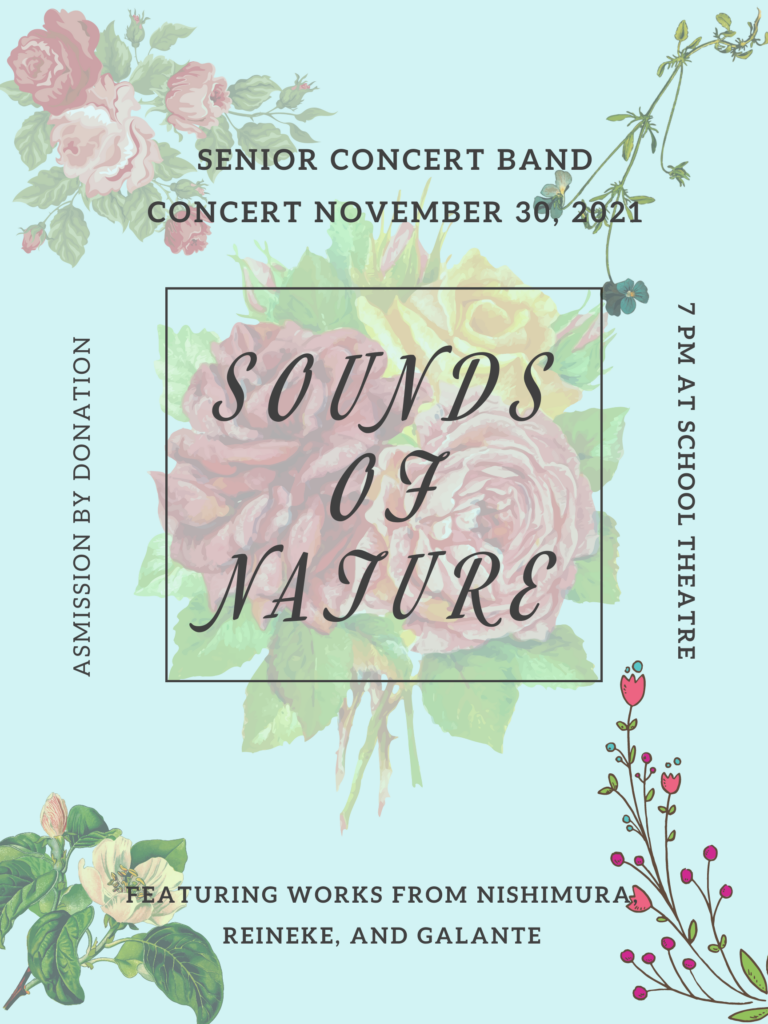
I thought that I would gain some more experience with creating images, so I made a concert poster for a unit I created for my teachable subject class! This will be something as a music educator, I will be doing often and decided to gain some experience. I used Canva for this because we did a workshop with it before.

I think that graphic design also can give students a way to teach us too, and take a sense of ownership in their learning. It can be a way to re-engage a learner who is completely disconnected. I do look forward to learning more tricks to use PowerPoint, and other tools to create!

EdTech Reflection #4

This week in class I enjoyed getting to learn about editing and screencasting! Though I had finished my introductory video before class, it was beneficial to go through the activities in class and get more ideas on how I can edit videos, as it is a common use of assessment in music and being able to pass these skills along to my students will be of benefit to them. One of my goals as an educator is to have my students be able to show their understanding of multiple methods, and these workshops enable me to give more support to future students in their endeavours.

I did create this screen capture, however, my computer will currently not record the audio, though I did set it up properly. So hopefully in the future, it will cooperate! I restarted my computer as asked by the chrome extension to no avail, but I feel comfortable setting that up next time!

Free inquiry #3- new chords and some sight-singing

This week, though extremely busy, I found some time to learn a few new chords, and sight-sing and sightread a few songs. I learned E minor, and D minor, neither of which are my favourite to try to reach for, but extremely common in songs. I find sight-singing valuable because when we just start learning chords and strumming patterns, it is easy to lose sight of the whole picture.

Somewhere over the rainbow sing through

The first run for me has always been about getting a feel for the piece I am learning; to capture the energy and meaning of it. Fluency between chords comes with practice, but this was just getting through with minimal pausing, as to not get stuck in that habit.

Another song I sang thorough! I quickly went through it and went for it. For me, doing these without extensive practice isn’t easy, but it is important because it is okay for our students to know we aren’t perfect because it helps connect us all.

Thanks for reading! -K

Open Education

I found this week’s class on open education very useful. As teachers, we want to share knowledge, and every teacher I have met says “If you like an idea or technique, take it! Credit it a few times, then just keep doing it”. It was nice seeing people posting content for others to use (of course giving credit where credit is due is always important!) to benefit the greater good of learning around the world. I think that the open textbooks on the B.C Open textbook project, in particular, is an incredible resource because it makes education and learning more accessible for anyone. Also, OER commons is wonderful; particularly to me because it is likely I will be the only teacher in my subject in my school, so having resources online to look at in the absence of subject-specific colleagues is comforting. I think a fascinating thing to do for my learning and practicing, is finding a resource that I am allowed to modify and try to indigenize it and make it applicable to my teachable if it isn’t. Or, use them as ways to practice writing learning outcomes for my students. I look forward to discovering more sources and ways to use them, and I think these are incredibly beneficial for teachers, especially in rural areas.

Reflection #2- Technology in the Classroom

I find the whole debate surrounding technology rather fascinating. When I was in high school, they were almost never allowed in the classroom (truly, maybe one or two times a school year) and though I’m not long removed from high school, the attitude surrounding them has changed completely.

Personally, I can’t say I love the idea of allowing students to blatantly be on their phones in class, but I am also in a teachable subject that there is a lot of hands-on doing and collaboration, so being on their phones doesn’t only affect them, but negatively impacts the entire class. But I do see the upside to them. Talking to a teacher at my observation school, they said that for a lot of students who have a lot of anxiety or ADHD, they use them to stimulate themselves quietly, so they can still be present in the classroom and hopefully learn something. This conversation with them really opened my eyes, because really, at the end of the day we are there for our students, and anyway that they are in the classroom is always a good day.

Going back to Jesse’s chat today was interesting, though I can’t say remarkably eye-opening, he did have a lot of good insight into how to meet them in the middle. Using his example of twenty minutes of class and 2 minutes on their phones could work, but it really depends on the classroom. I do think that their phones can be a great tool for assessment (things like Kahoot, or surveys) to see where they are at that moment, and giving them a silent, anonymous way to demonstrate that is really important. I always appreciate that as a student and as a person who is very shy and lacks the confidence to speak in class.

It is also critical in giving special needs students an opportunity to participate in class, particularly when teachers do not make sure the content they show is captioned or offered with described video or an image description. Technology, particularly in the convenience of a cell phone has made the world more accessible; even zoom, though most folks hated it. Being online gave students who needed accommodations the opportunity to participate in a greater way because their learning environment was more accessible. I definitely benefited from this, because I could turn up the volume of people in zoom to what I needed, so being back in person and wearing masks has negatively affected how I can participate in classes because people’s voices are muffled. (Though, I would not feel comfortable in a maskless classroom at the moment, personally) I am not writing this for pity, but, I think it’s important for able-bodied folks to realize how online education was actually quite a bit more accessible than in-person education is for many people, and we have technology like zoom to thank for that.

I appreciate that we have talked about the legalities of being a teacher in a social media-influenced world, because we have to protect our students, and so I am grateful for that, and it has opened my eyes to what privacy is. Why is a direct message on Instagram wrong, given only the people involved can see it when an email is seen as acceptable, though only the people involved see it? Is it the servers they are hosted on, the companies they are owned by? These are the kind of questions I hope to gain some clarity on in the coming weeks.

Free Inquiry Week 2: Ukulele

This week I changed the tuning of my ukulele. In my (very) limited experience before this project I had it tuned in D, so I decided to now play in C. Though for younger students, tuning in the key of D is better, as it is higher and their voices haven’t changed, I chose to use C because it opens up choices for future students (and myself now!) to have more opportunities and choices in what they may want to learn as part of their education. More choices for them to discover gives them more ownership of their education and keeps them engaged because they can choose to learn songs they enjoy already.

As for me, I am learning new chords and trying to find some songs to play! I have been using mainly C, A, A minor, G and G7, and just working through transitioning between those chords, focusing on fluency and accuracy. I find the strumming in pattern and changing chords at the right time awkward, but it’s early still!

« Older posts Newer posts »